


As a provider of Composite Silver Powder, I've witnessed firsthand the importance of its performance in various applications. From electronics to energy storage, the quality and performance of Composite Silver Powder can significantly impact the final product's functionality and efficiency. In this blog, I'll share some practical strategies on how to improve the performance of Composite Silver Powder, drawing on my experience and industry knowledge.
Understanding Composite Silver Powder
Composite Silver Powder is a specialized material that combines silver with other elements or compounds to enhance its properties. It offers a range of benefits, including improved conductivity, corrosion resistance, and cost-effectiveness compared to pure silver powder.
One common type of Composite Silver Powder is Surface Silver Plated Copper Powder, where a thin layer of silver is plated onto copper particles. This structure allows the powder to retain the high conductivity of silver on the surface while leveraging the lower cost and good mechanical properties of copper cores.
Another type you might be interested in is High Purity Copper Powder Conductivity, which also plays a vital role in the composition and performance of Composite Silver Powder.
Strategies to Improve Performance
1. Precise Control of Composition
The composition of Composite Silver Powder is crucial for its performance. A precise ratio of silver to other components ensures optimal conductivity and other desired properties. Through advanced manufacturing techniques and strict quality control, we can carefully adjust the composition to meet specific application requirements.
For example, in electronic applications where high conductivity is essential, a higher proportion of silver may be used. On the other hand, for applications with budget constraints, a more balanced ratio that maintains acceptable performance while reducing costs can be achieved. By working closely with our customers, we can customize the composition of the powder to deliver the best results.
2. Enhanced Surface Treatment
The surface properties of Composite Silver Powder have a significant impact on its performance. Surface treatment can improve the powder's dispersion, oxidation resistance, and adhesion.
One effective surface treatment method is to coat the powder particles with a thin layer of protective material. This coating can prevent oxidation and corrosion, which can degrade the performance of the powder over time. Additionally, it can improve the powder's dispersion in solvents or matrices, ensuring more uniform distribution and better overall performance in the final product.
3. Optimized Particle Size and Shape
The particle size and shape of Composite Silver Powder also influence its performance. Smaller particles generally offer higher surface area, which can enhance conductivity and reactivity. However, extremely small particles may be more prone to agglomeration, which can negatively affect performance.
We use advanced particle size control technology to produce powder with a narrow particle size distribution. This ensures that the powder has consistent performance and can be easily processed in various applications.
In addition to particle size, the shape of the particles can also be optimized. Spherical particles, for example, have better flowability and filling properties, which can be beneficial in some applications such as powder metallurgy and 3D printing.
4. Advanced Manufacturing Processes
Employing advanced manufacturing processes is essential for improving the performance of Composite Silver Powder. Our state-of-the-art manufacturing facilities use the latest technologies to ensure the high quality and consistency of our products.
For instance, the plating process used to create Surface Silver Plated Copper Powder is carefully controlled to ensure a uniform and durable silver coating. This not only improves the powder's conductivity but also enhances its corrosion resistance.
Quality Assurance and Testing
To guarantee the performance of our Composite Silver Powder, we have a comprehensive quality assurance and testing system in place. Every batch of powder undergoes rigorous testing to ensure that it meets or exceeds industry standards.
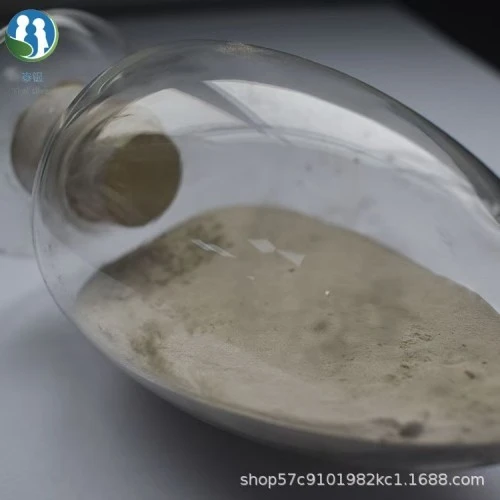

We use advanced analytical techniques such as scanning electron microscopy (SEM), energy-dispersive X-ray spectroscopy (EDX), and conductivity testing to evaluate the powder's particle size, composition, and performance. This allows us to identify and address any potential issues before the powder is delivered to our customers.
Applications and Benefits
Composite Silver Powder has a wide range of applications across various industries. In the electronics industry, it is used in the production of printed circuit boards (PCBs), conductive inks, and electronic components. Its high conductivity and corrosion resistance make it an ideal material for these applications.
In the energy storage sector, Composite Silver Powder is used in batteries and fuel cells to improve their performance and efficiency. The powder's high surface area and conductivity help to enhance the charge and discharge rates of the batteries, leading to longer battery life and better overall performance.
In addition to these applications, Composite Silver Powder is also used in the automotive, aerospace, and medical industries. Its unique properties make it a versatile material that can be tailored to meet the specific needs of different applications.
Conclusion
Improving the performance of Composite Silver Powder requires a combination of precise composition control, enhanced surface treatment, optimized particle size and shape, and advanced manufacturing processes. As a leading provider of Composite Silver Powder, we are committed to delivering high-quality products that meet the evolving needs of our customers.
If you are interested in using Composite Silver Powder in your applications or would like to learn more about our products and services, we encourage you to reach out for a procurement discussion. Our team of experts is ready to work with you to find the best solutions for your specific requirements.
References
- [1] "Advanced Powder Metallurgy for High-Performance Materials" - Journal of Materials Science
- [2] "Conductive Powders and Their Applications in Electronics" - Proceedings of the IEEE


