


As a supplier of nickel-silver-plated powder, I am often asked about the ferroelectric property of this unique material. In this blog, I will delve into the concept of ferroelectricity, explore whether nickel-silver-plated powder exhibits such properties, and discuss its potential applications.
Understanding Ferroelectricity
Ferroelectricity is a fascinating property found in certain materials. These materials possess a spontaneous electric polarization that can be reversed by the application of an external electric field. This phenomenon is similar to ferromagnetism, where materials can be magnetized and demagnetized. The key characteristic of ferroelectric materials is the presence of a hysteresis loop, which shows the relationship between the electric polarization and the applied electric field.
The origin of ferroelectricity lies in the crystal structure of the material. In a ferroelectric crystal, the atoms are arranged in such a way that there is a net dipole moment even in the absence of an external electric field. When an external field is applied, the dipoles can align themselves with the field, resulting in a change in the polarization. Once the field is removed, the polarization remains, giving rise to the hysteresis effect.
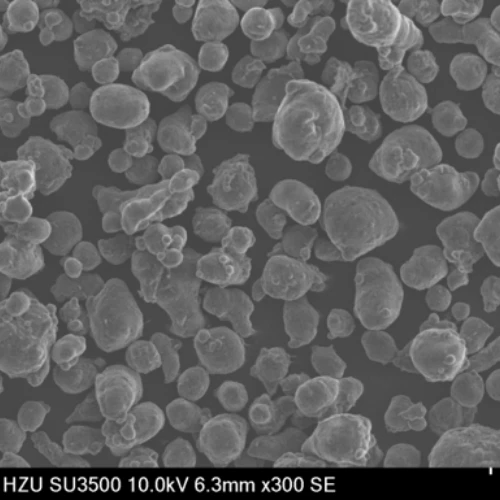

Nickel-Silver-Plated Powder: Composition and Structure
Nickel-silver-plated powder is a composite material consisting of a nickel core coated with a layer of silver. The silver coating provides excellent electrical conductivity, while the nickel core offers mechanical strength and stability. The composition and structure of the powder can vary depending on the manufacturing process and the intended application.
The silver plating on the nickel powder is typically achieved through electroplating or chemical deposition methods. These processes ensure a uniform and adherent silver layer on the surface of the nickel particles. The thickness of the silver layer can be controlled to meet the specific requirements of the application.
Does Nickel-Silver-Plated Powder Have Ferroelectric Properties?
In general, nickel-silver-plated powder does not exhibit ferroelectric properties. Ferroelectricity is mainly associated with certain types of crystals, such as barium titanate and lead zirconate titanate. These materials have a specific crystal structure that allows for the formation of spontaneous electric dipoles.
Nickel and silver are both metals, and metals do not have the necessary crystal structure to support ferroelectricity. The silver coating on the nickel powder is a thin layer that does not change the fundamental properties of the underlying nickel. Therefore, the powder as a whole does not possess the characteristics required for ferroelectric behavior.
However, it is important to note that the properties of a material can be influenced by various factors, such as impurities, defects, and the presence of other phases. In some cases, small amounts of ferroelectric impurities or the formation of a ferroelectric phase during the manufacturing process could potentially lead to weak ferroelectric behavior in the nickel-silver-plated powder. But such cases are rare and require specific conditions.
Applications of Nickel-Silver-Plated Powder
Although nickel-silver-plated powder does not have ferroelectric properties, it has a wide range of applications due to its excellent electrical conductivity, corrosion resistance, and mechanical properties. Here are some of the common applications:
Electrical and Electronic Applications
- Conductive Pastes: Nickel-silver-plated powder is used in the production of conductive pastes for printed circuit boards (PCBs), touch screens, and other electronic devices. The high electrical conductivity of the powder allows for efficient transfer of electrical signals.
- EMI/RFI Shielding: The powder can be used to create electromagnetic interference (EMI) and radio frequency interference (RFI) shielding materials. The silver coating provides a good barrier against electromagnetic waves, protecting sensitive electronic components from interference.
- Battery Electrodes: Nickel-silver-plated powder can be used as an electrode material in batteries, such as lithium-ion batteries. The high conductivity and stability of the powder contribute to the performance and longevity of the battery.
Coating and Plating Applications
- Decorative Coatings: The silver coating on the nickel powder gives it a shiny and attractive appearance, making it suitable for decorative coatings on various objects, such as jewelry, watches, and automotive parts.
- Corrosion Protection: The silver layer provides excellent corrosion resistance, protecting the underlying nickel from oxidation and other forms of corrosion. This makes the powder ideal for use in harsh environments.
Other Applications
- Catalysis: Nickel-silver-plated powder can be used as a catalyst in various chemical reactions. The high surface area and catalytic activity of the powder make it effective in promoting chemical reactions.
- Composite Materials: The powder can be incorporated into composite materials to enhance their electrical and mechanical properties. For example, it can be used in the production of conductive polymers and composites for aerospace and automotive applications.
Where to Find Nickel-Silver-Plated Powder
If you are interested in purchasing nickel-silver-plated powder, you can find a variety of products on our website. We offer high-quality Filling Material Silver Nickel Powder, Silver Plated Metal Powder, and Silver Plated Nickel Alloy Powders. Our products are manufactured using advanced techniques to ensure consistent quality and performance.
We are committed to providing our customers with the best products and services. If you have any questions or need further information about our nickel-silver-plated powder, please feel free to contact us. We look forward to discussing your requirements and helping you find the right solution for your application.
References
- Jaffe, B., Cook, W. R., & Jaffe, H. (1971). Piezoelectric Ceramics. Academic Press.
- Lines, M. E., & Glass, A. M. (1977). Principles and Applications of Ferroelectrics and Related Materials. Oxford University Press.
- Sessler, G. M. (1980). Ferroelectrets: A New Class of Electromechanical Transducer Materials. IEEE Transactions on Electrical Insulation, 15(3), 209-216.


