Controllability of Electrical Properties: By changing the type, content, and distribution of conductive fillers, the resistivity of conductive textile materials can be precisely adjusted within a range of orders of magnitude. This designability allows them to meet both the semiconductivity required for electrostatic dissipation (10^6-10^9 Ω/sq) and the high conductivity required for electromagnetic shielding (10^-3-10^0 Ω/sq), adapting to diverse needs from precision electronics to strong electromagnetic protection.
Synergistic Optimization of Mechanical and Conductivity: Compared to traditional conductive materials, conductive textile materials achieve stable conductive pathways while maintaining the inherent softness and extensibility of fabrics. Studies have shown that conductive fibers with a core-sheath structure can achieve a breaking strength of 3-5 cN/dtex, maintain a breaking elongation of 15%-30%, and exhibit a resistance change rate of less than 10% after 1000 bends, significantly outperforming brittle metal films or coatings.
Intelligent Environmental Response: Some conductive textile materials possess the ability to sense and respond to external stimuli. Thermosensitive conductive fabrics can automatically adjust their porosity in response to temperature changes, achieving dynamic thermal management; strain-sensitive materials can convert mechanical deformation into quantifiable electrical signal changes, providing a foundation for wearable sensing. This intrinsic intelligent response characteristic is difficult to achieve with rigid electronic devices.
Sustainability and Eco-friendliness: New conductive textile materials increasingly emphasize life cycle assessment. The development of bio-based conductive polymers, recyclable metal coating technologies, and water-based finishing processes enables conductive fabrics to maintain functionality while reducing energy consumption and pollution during production. Some products have already obtained OEKO-TEX Standard 100 certification, meeting the safety requirements for use by infants and sensitive populations.
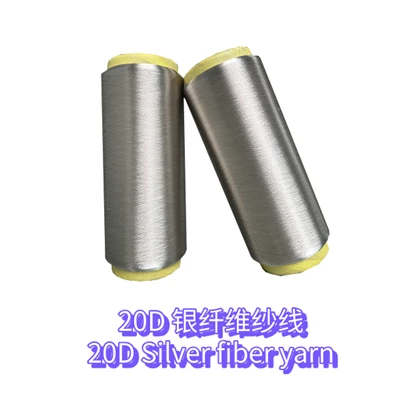
Continuously Improving Cost-Effectiveness: With large-scale production and process optimization, the cost curve of conductive textile materials continues to decline. Taking silver-plated fiber as an example, its unit conductivity cost has decreased by approximately 40% in the past five years, enabling high-end functional textiles to gradually penetrate the mass consumer market, such as smart clothing and home physiotherapy products.