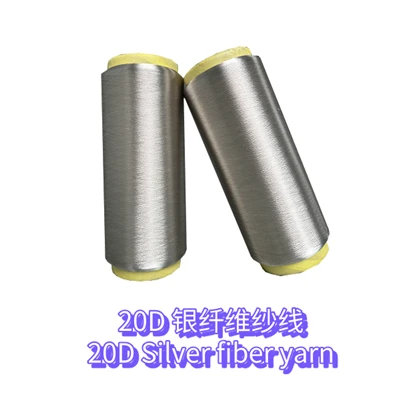
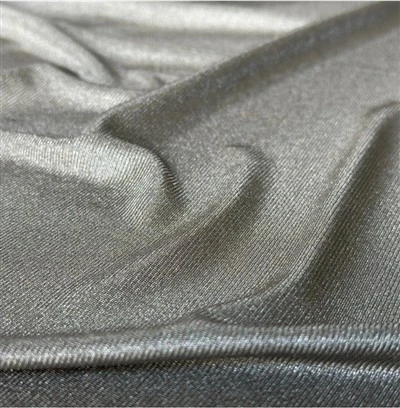
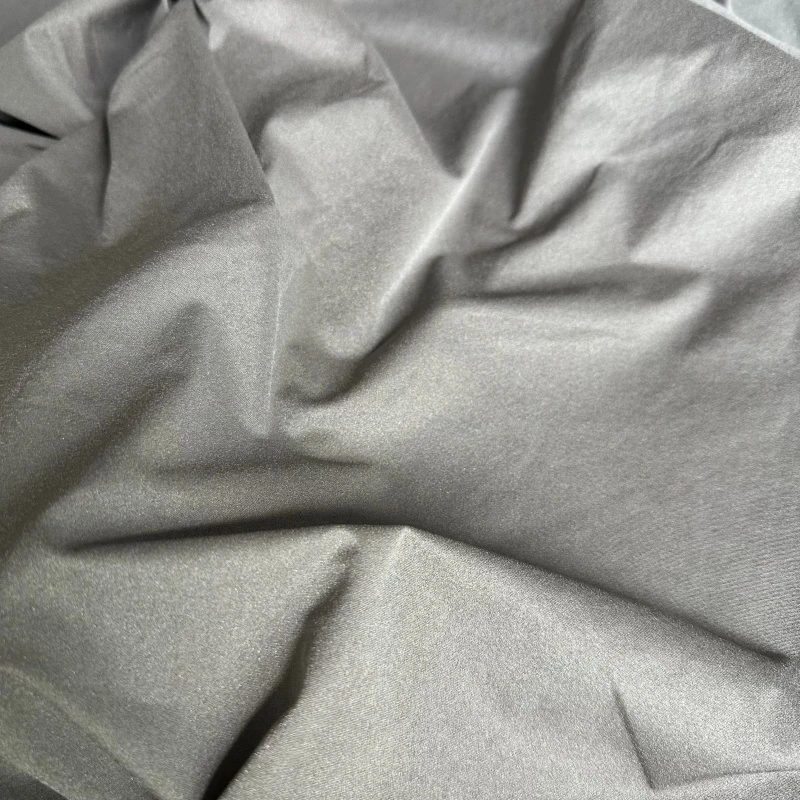
The core reason lies in the fact that silver fiber is a high-performance conductive material. Silver itself possesses excellent conductivity, allowing it to conduct current from a power source (such as a battery) to a light bulb, forming a complete circuit.
1. Silver is the best conductor of electricity among all metals in nature. Its conductivity is several times, even hundreds of times, higher than that of ordinary metals. This characteristic lays the foundation for the fabric's conductivity.
2. A special process "weaves" silver into the fabric. Silver fiber fabric is not ordinary fabric; it is made by permanently bonding a layer of pure silver to the fiber surface using a special technique. This transforms ordinary textiles, which are originally non-conductive, into having the same conductive properties as silver metal.
A closed circuit is formed. When one contact (or wire) of the light bulb touches the silver fiber fabric, and another contact touches one terminal of the battery, and the other terminal of the battery also touches the same piece of silver fiber fabric, a circuit is formed as follows: Battery positive terminal → Silver fiber fabric (acting as a wire) → Light bulb → Battery negative terminal. Current will "flow" through the conductive silver fiber fabric, lighting the light bulb. This is the same principle as connecting a light bulb with ordinary wires, except that the "wires" here are replaced by silver fiber fabric.