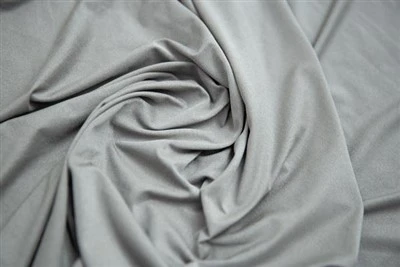
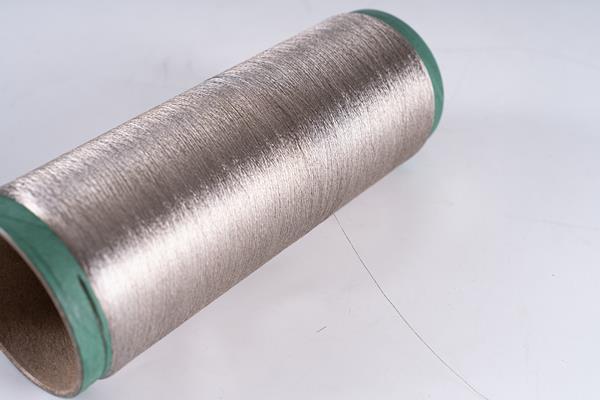
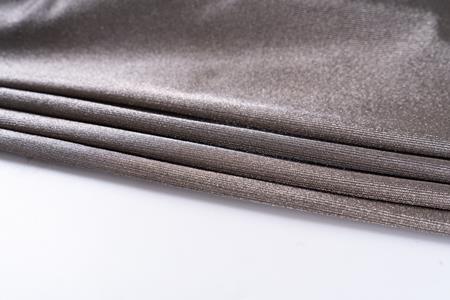
Compared to traditional electromagnetic shielding materials, copper-nickel conductive fiber fabrics exhibit comprehensive advantages across multiple dimensions, making them a preferred solution for complex electromagnetic environments.
At the physical performance level, copper-nickel fiber fabrics overcome the rigidity limitations of metallic materials. Traditional copper foils or metal meshes are prone to stress cracking after bending or folding, leading to the breakage of conductive pathways and a sharp decline in shielding effectiveness. The flexible nature of the fiber structure allows it to withstand repeated deformation, maintaining a stable conductive network even under bending conditions with a radius of curvature of 5mm. This mechanical adaptability has irreplaceable value for emerging applications such as wearable devices and flexible electronic packaging.
The designability of electromagnetic performance is another core advantage. By adjusting the fiber diameter, coating thickness, and fabric density, the shielding effectiveness of copper-nickel metal fabrics can be precisely customized within the range of 30dB to 80dB. Plain weaves are suitable for basic shielding across a wide frequency band, while twill and satin weaves increase the density of fiber interlacing points to create resonant absorption effects in specific frequency bands. The dielectric layer design introduced in the multi-layer composite structure further optimizes reflection and absorption losses, breaking through the frequency band limitations of single-material shielding mechanisms.