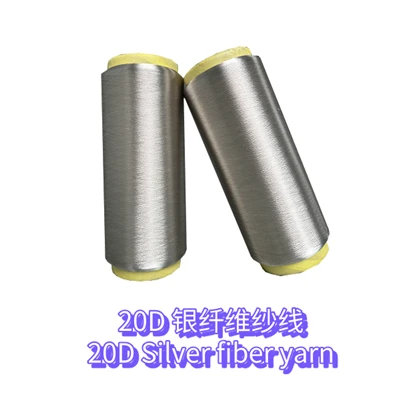
The properties of conductive fiber filaments determine their irreplaceable role in high-end textiles. From a microstructural perspective, silver fiber filaments are typically produced using a silver-plated composite spinning process, where pure silver or silver alloys are uniformly deposited at nanoscale thicknesses onto the surface of polymer substrates such as nylon and polyester, forming a dense conductive coating layer. This core-shell structure retains the flexibility and textile processability of the matrix fiber while endowing it with excellent electronic conductivity-its surface resistivity can be as low as 10⁻³Ω·cm, far superior to carbon-based conductive fibers.
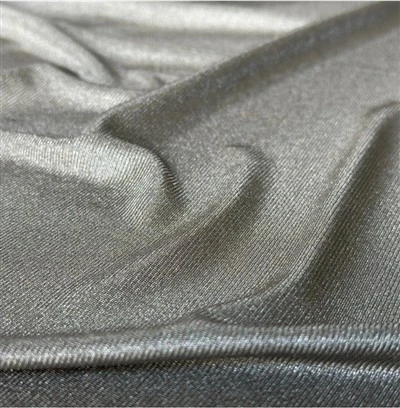
In terms of thermal properties, the high thermal conductivity of silver fiber filaments (approximately 429 W/m·K) makes them stand out in the field of functional thermal management. Weaving silver fiber filaments into fabrics at a specific density can create directional heat conduction channels, enabling active thermal regulation of the human body's microenvironment. Experimental data shows that thermally conductive fabrics containing silver fiber filaments have a thermal resistance that is more than 40% lower than ordinary polyester fabrics, demonstrating application potential in outdoor sportswear and medical cooling dressings.