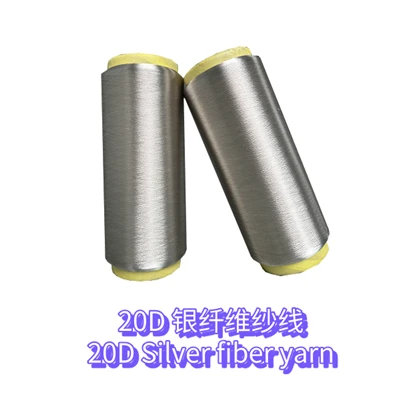
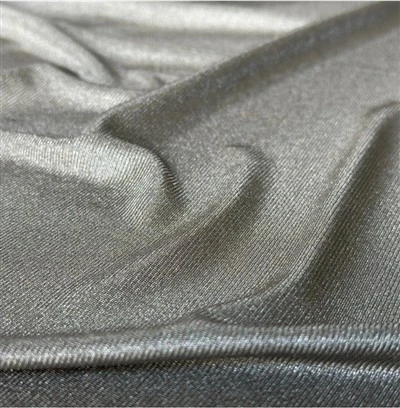
Conductive silver textile yarn is a functional thread incorporating silver into textile fibers using a specific process. It retains the flexibility and weavability of traditional textiles while endowing the material with unique conductive properties. Structurally, these threads typically use synthetic fibers such as nylon and polyester, or natural fibers such as cotton and wool, as a base. Through techniques like chemical silver plating, vacuum sputtering, or composite spinning, a continuous and uniform silver layer is formed on the fiber surface, or silver particles are uniformly dispersed within the fiber, thus creating a highly efficient electron conduction channel.
Compared to ordinary metal wires, the core advantage of conductive silver textile yarn lies in its "flexible conductivity." Its diameter is typically only tens to hundreds of micrometers, and it can withstand thousands of bends without breaking. This combination of rigidity and flexibility stems from the physical properties of silver itself-as the metal with the best known conductivity, silver has a resistivity of only 1.59 × 10⁻⁸ ohm-meters, and its chemical stability is superior to common conductive metals such as copper and aluminum, making it less prone to oxidation and failure in humid or sulfur-containing environments.
From a manufacturing process perspective, conductive silver textile yarn mainly involves two technical routes. One method is fiber silver plating, where finished fibers are immersed in a chemical plating solution containing silver ions. Through a reduction reaction, silver atoms are deposited layer by layer onto the fiber surface, forming a metal coating of controllable thickness. This method is relatively low-cost, but the coating's abrasion resistance requires post-treatment enhancement. The second method is silver fiber composite spinning, where nano-silver powder or silver ion antibacterial agents are blended with a polymer melt and extruded. The silver component is encapsulated within the fiber. While its conductivity is slightly lower than surface-plated silver products, it offers more durable functional stability and a gentler skin feel.
In practical terms, conductive silver textile threads can be used as independent sewing or embroidery threads, or they can be further twisted and woven into conductive fabrics. Their linear density specifications cover a wide range from 20 denier to 300 denier, catering to the varying strength and fineness requirements of different applications. For example, fine denier silver threads used for signal transmission in smart clothing need to balance concealment and sensitivity, while coarse denier silver threads used in electromagnetic shielding tents prioritize mechanical strength and conductive cross-sectional area.
The advent of this material essentially breaks down the traditional boundaries between "textiles" and "electronic devices." When the conductive network of silver takes the form of textiles, everyday items such as clothing, home textiles, and medical dressings gain the ability to sense the environment, transmit signals, and regulate electromagnetic fields, providing key interface material support for cutting-edge fields such as flexible electronics, smart healthcare, and wearable devices.